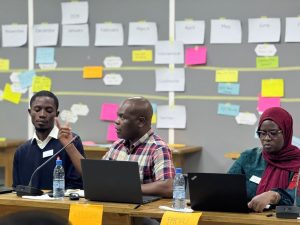
As Resilient40, we are proud to play a leading role in advocating for the adoption of actionable, science-driven strategies to address the urgent challenges of chemicals and waste management globally, with a particular focus on the unique needs of Least Developed Countries (LDCs).
The upcoming resumed third session of the Ad Hoc Open-Ended Working Group on a Science-Policy Panel (SPP OEWG 3.2), scheduled for June 14 – 19, 2025, in Punta del Este, Uruguay, alongside the Intergovernmental Meeting on June 19–20, 2025, represents an invaluable platform to push for transformative discussions and meaningful commitments.
In this context, R40 urges partners and stakeholders to prioritize the following:
Key Priorities
1. Strengthening National Science Platforms:
Advocate for the establishment of comprehensive national platforms dedicated to chemicals and waste monitoring, evaluation (M&E), and data governance.
Promote transboundary collaboration to improve data sharing and align national strategies with global frameworks for chemicals and waste management.
2, Enhancing Accountability through Alternative Reporting:
Encourage NGOs and civil society organizations to produce independent reports that complement national reviews, identify gaps, and strengthen transparency and accountability in environmental governance.
3. Investing in Scientific Capacity in LDCs:
Call for increased funding and technical support for scientific research projects in LDCs, focusing on climate change, pollution prevention, and sustainable waste management.
Emphasize innovative and community-driven solutions, while strengthening local research infrastructure.
4. Empowering Communities and Stakeholders:
Support initiatives that empower researchers, policymakers, and marginalized communities to contribute meaningfully to science-policy processes.
Adopt gender-responsive and inclusive approaches that amplify the voices of women, youth, and vulnerable populations.
5. Fostering Collaborative and Inclusive Governance Frameworks:
Advocate for inclusive governance frameworks, including science-policy panels that integrate civil society organizations (CSOs) as active participants in decision-making processes.
6.Promoting Regional Advocacy and Leadership:
Showcase the contributions of R40 leaders in advocating for effective chemicals and waste governance.
Highlight regional initiatives and partnerships that align with UNEP’s objectives, including collaborative efforts under the African Group of Negotiators on Climate Change (AGN), the Great Green Wall Initiative, and UNEP platforms.
R40 reaffirms its commitment to advancing global efforts for sound chemicals and waste management policies. By championing inclusive, science-driven strategies, we seek to bridge critical gaps in governance and foster long-term, sustainable solutions that benefit underserved regions and vulnerable populations.
We invite all stakeholders to engage actively in refining these priorities and working together to achieve impactful results in addressing environmental challenges through the eyes of the youth at the frontlines of the crises.